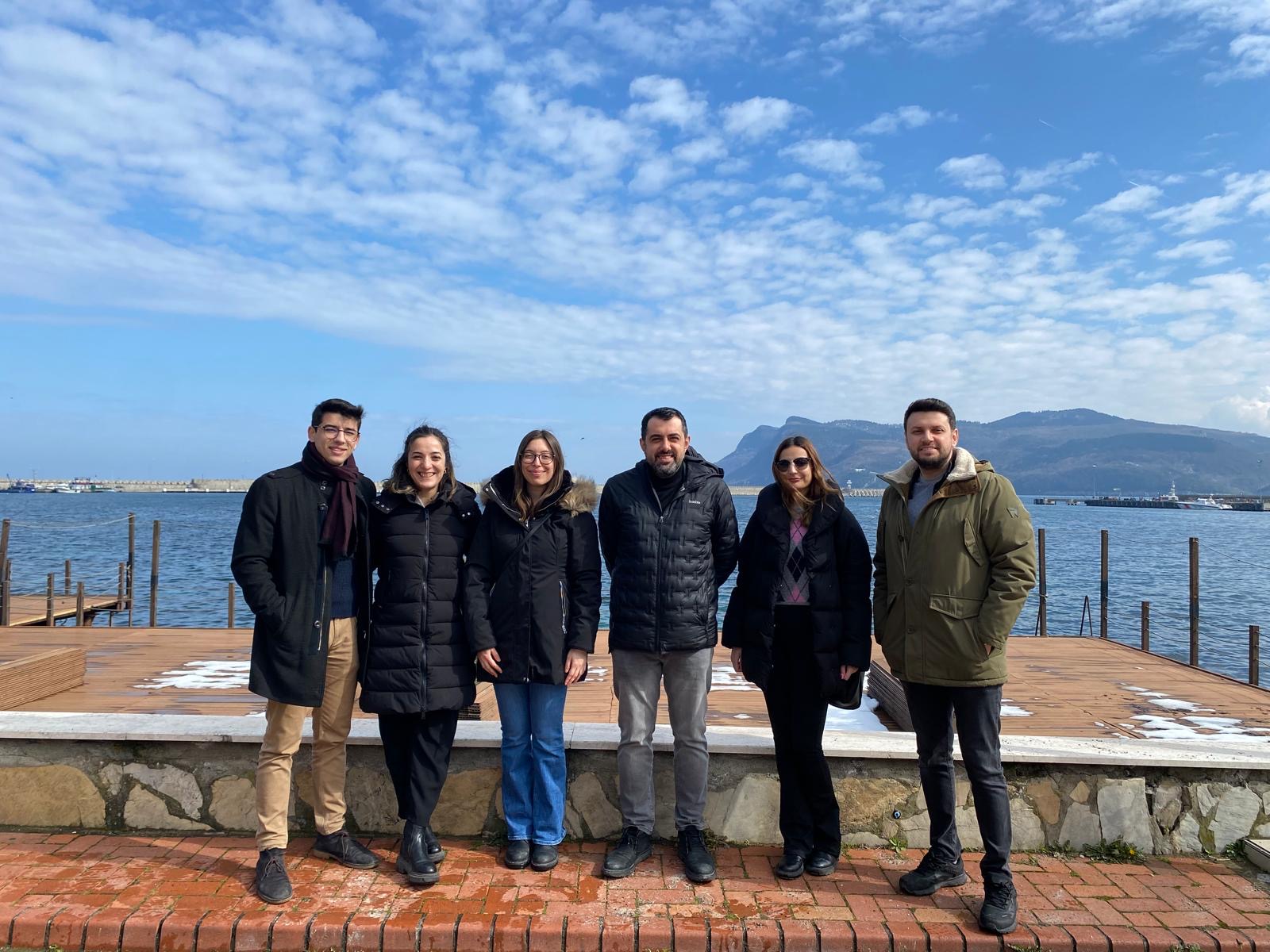
The members of our research group participated in the third transnational partner meeting of DigiLTE project which took place in Bartın on February 27-28.
On the first day, partners shared updates on Work Package 3 and discussed MOOC materials, including videos, subtitles, and introductory lectures on CA and CIC. They also prepared scripts for the introductory MOOC video. In the afternoon, discussions focused on the icCALTE conference, finalizing paper formats and testing the submission system. National dissemination events were reviewed, and Arzu Kanat-Mutluoğlu presented H5P, demonstrating its use in the MOOC.
The second day centered on the MOOC’s technical aspects. Participants explored H5P learning materials in small groups and provided feedback. The meeting concluded with the completion of the introductory MOOC recordings.
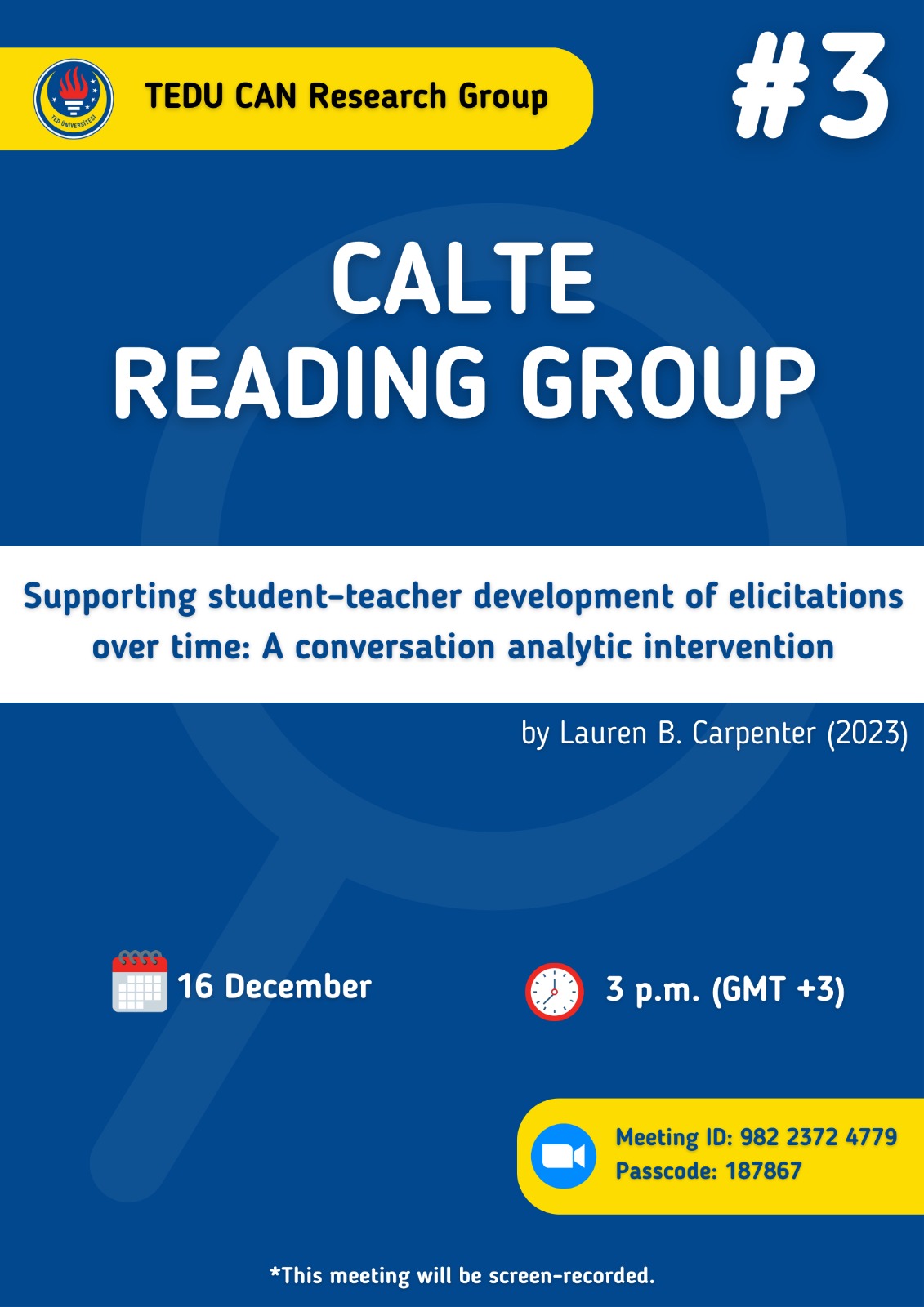
The third CALTE reading group meeting is inbound! Next in our readings, we will be looking into “Supporting student–teacher development of elicitations over time: A conversation analytic intervention” by Lauren B. Carpenter. You can find the paper here.
As an idea that emerged in the INGED ELTER SIG workshop this year, the meeting will be screen-recorded and used for research purposes. The session will take place on December 16 (Mon) at 3 p.m. (GMT+3). Here is the Zoom link:
Topic: TEDU-CAN Research Group – Reading Group – Third Meeting
We welcome everyone who is interested in Conversation Analysis and (Language) Teacher Education. You do not need to have attended previous events to attend this meeting. The participants are kindly invited to read the paper in advance and prepare questions and comments. The meeting is planned to take about an hour.
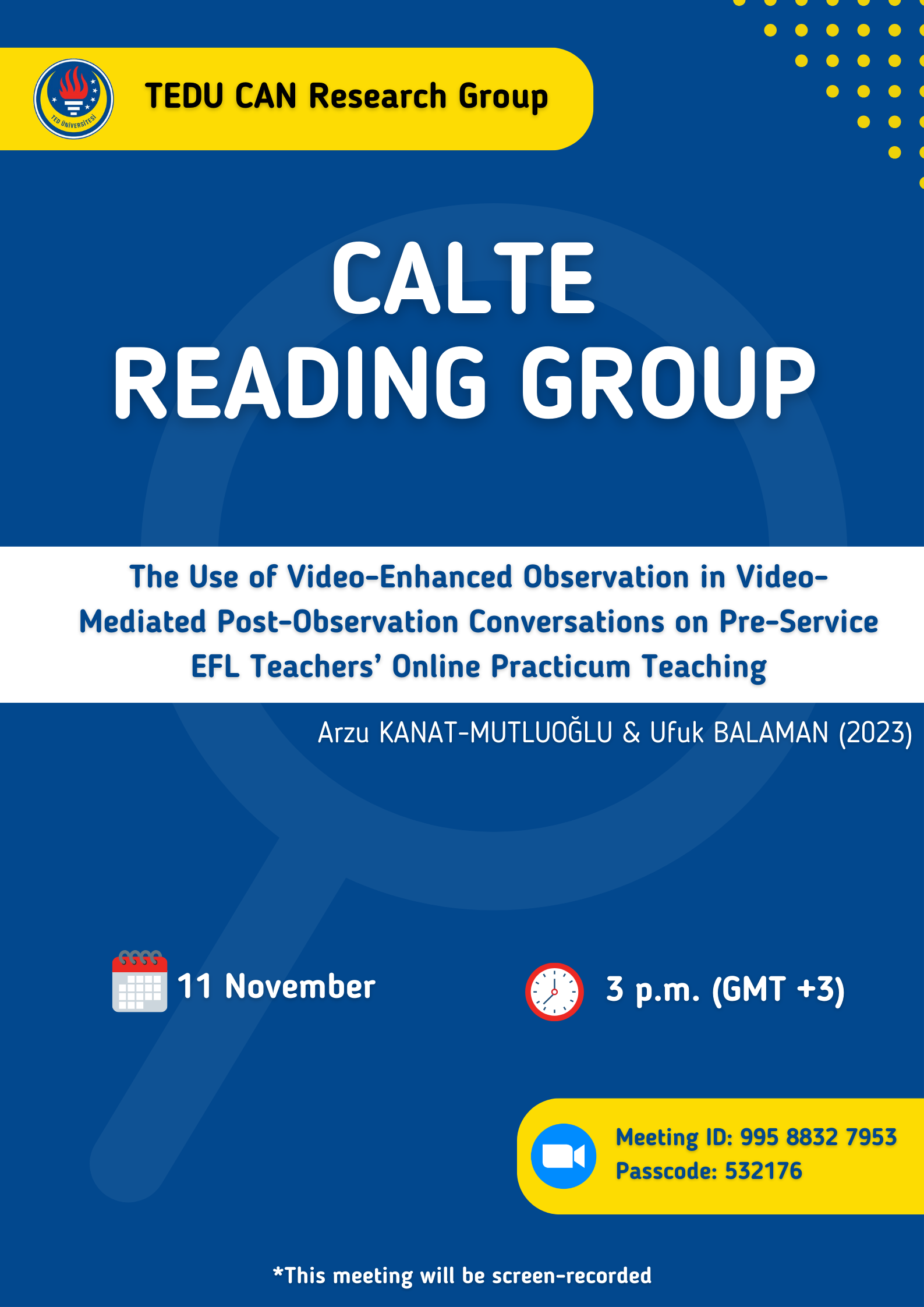
We thank you for your wonderful feedback on our first reading group meeting on Conversation Analysis and Language Teacher Education. Next up, we have selected “The use of video-enhanced observation in video-mediated post-observation conversations on pre-service EFL teachers’ online practicum teaching” by Arzu KANAT-MUTLUOĞLU and Ufuk BALAMAN. You can find the paper here.
As an idea that emerged in the INGED ELTER SIG workshop this year, the meeting will be screen-recorded and used for research purposes. The session will take place on November 11 (Mon) at 3 p.m. (GMT+3). Here is the Zoom link:
Topic: TEDU-CAN Research Group – Reading Group – Second Meeting
We welcome everyone who is interested in Conversation Analysis and (Language) Teacher Education. The participants are kindly invited to read the paper in advance and prepare questions and comments. The meeting is planned to take about an hour.
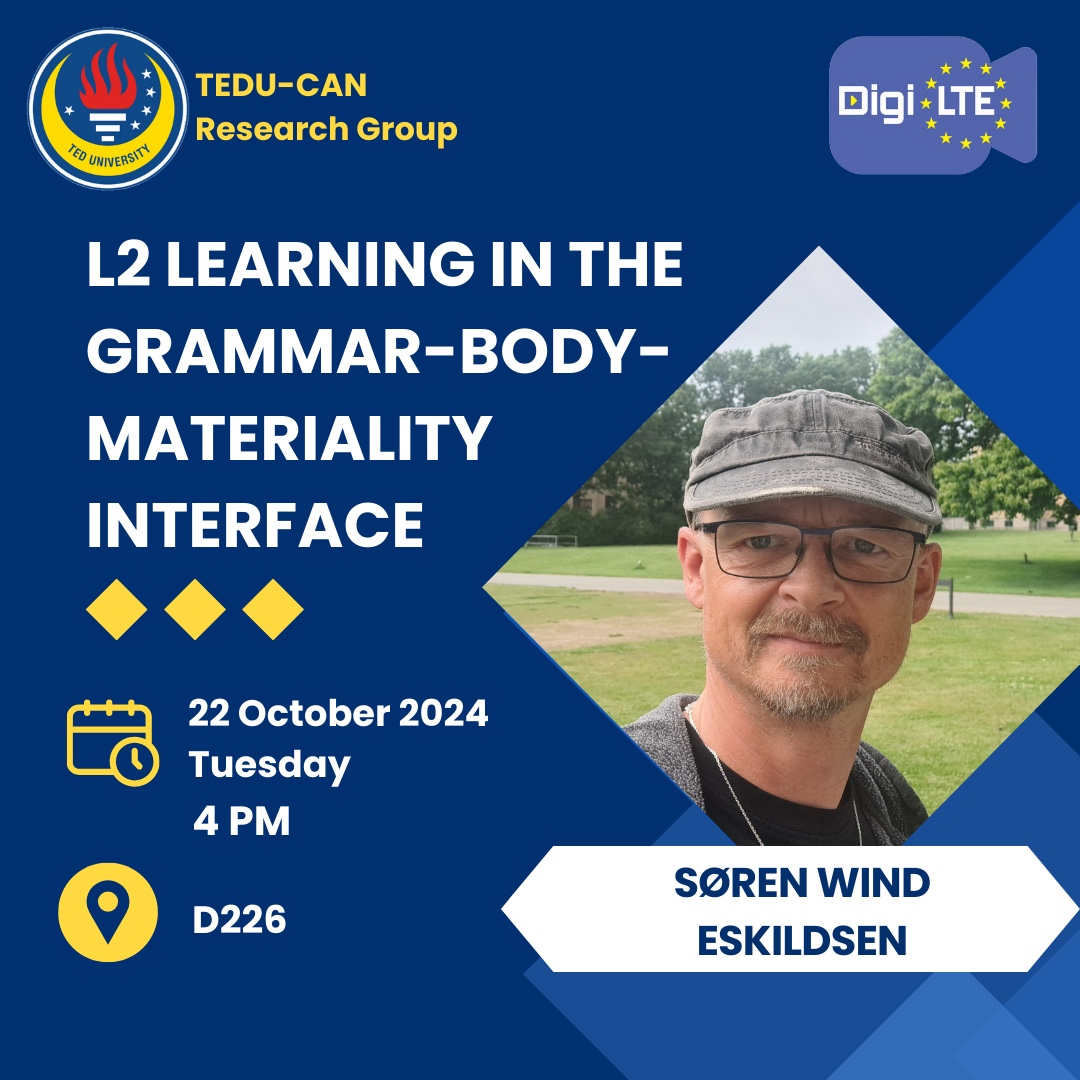
In the next TED University Conversation Analysis Research Group seminar, Søren Eskildsen will deliver a talk entitled “L2 Learning in the Grammar-Body-Materiality Interface”. The seminar is sponsored by the DigiLTE project and part of the forthcoming Transnational Meeting of the DigiLTE project (23-25 October, 2024). Dr. Eskildsen will participate in the meeting after the TEDU-CAN seminar as an invited expert/external advisor and bring new insights into the project activities with his expertise in L2 interaction research.
Join us on Tuesday, 22nd of October 2024 to explore Dr. Eskildsen’s recent work.
We are delighted to launch our reading group on Conversation Analysis and Language Teacher Education. For our first reading group meeting, we have selected “Developing Student-Teachers’ Interactional Competence through Video-Enhanced Reflection: A Discursive Timeline Analysis of Negative Evaluation in Classroom Interaction” by Olcay Sert, Annaliina Gynne and Maria Larsson. You can find this open access paper here.
As an idea that emerged in the INGED ELTER SIG workshop this year, the meeting will be screen-recorded and used for research purposes. The session will take place on October 14 (Mon) at 3 p.m. (GMT+3). Here is the Zoom link:
Topic: TEDU-CAN Research Group – Reading Group – First Meeting
We welcome everyone who is interested in Conversation Analysis and (Language) Teacher Education. The participants are kindly invited to read the paper in advance and prepare questions and comments. The meeting is planned to take about an hour.
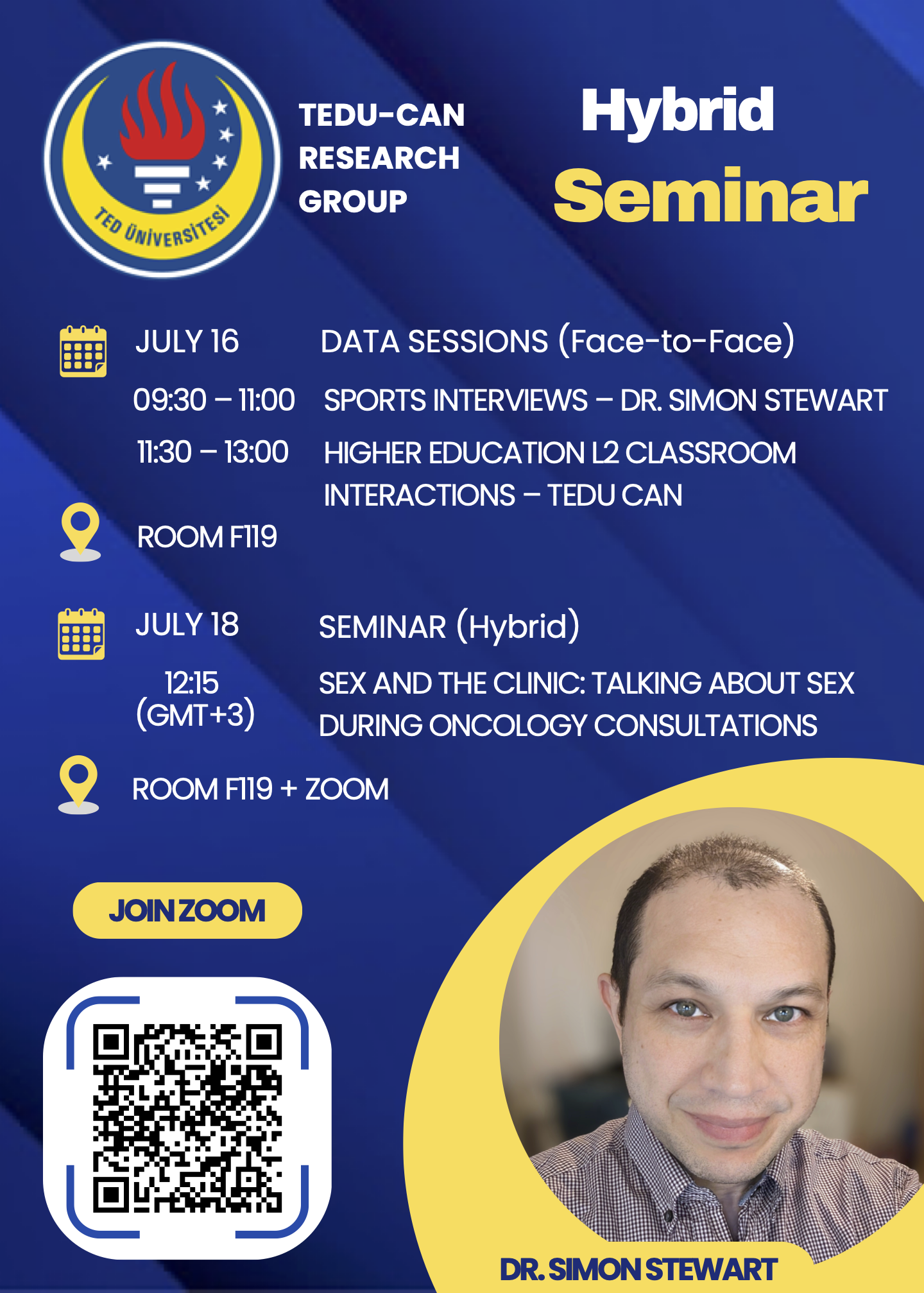
We are very happy to be hosting Simon Stewart at TEDU CAN for a series of events on 16th of July (face-2-face data sessions) and 18th of July (hybrid seminar), 2024. See the event flyer below.
Here is the bio of Dr. Stewart:
Simon is a lecturer in psychology with substantial prior experience in industries including local authorities and third sector organisations. He completed his BSc Psychology with the Open University, before gaining an MSc in Clinical and Health Research Methods at the University of Southampton as part of an ESRC funded MSc + PhD programme. Following this, he completed his PhD in October 2021.
Simon’s PhD included specialist training in Conversation Analysis at UCLA during the autumn semester of 2019. His thesis is a conversation analytic study of multi-party interactions comprising a patient, their partner, and a healthcare professional during clinical consultations for prostate cancer.
Simon’s research interests span domains of social, developmental, and health psychology. His current research focuses on the application of conversation analysis to better understand and improve communication in health and social care settings such as communication during clinical consultations, or family and practitioner interactions during therapeutic interventions.
Sex and the Clinic: Taking about sex during oncology consultations
Abstract
There are several cancers that can substantially impact a person’s sex life and their sexual relationships. This means that the sexual impact of these cancers is an important topic to discuss during clinical consultations. As part of a broader project proposal, this seminar will offer an overview of the current research landscape into talking about sex in clinical settings, it will identify the problems and questions to be addressed and offer an example of some conversation analytical research that examines how the sexual impact of localised prostate cancer is communicated to couples across four clinical sites in the UK.
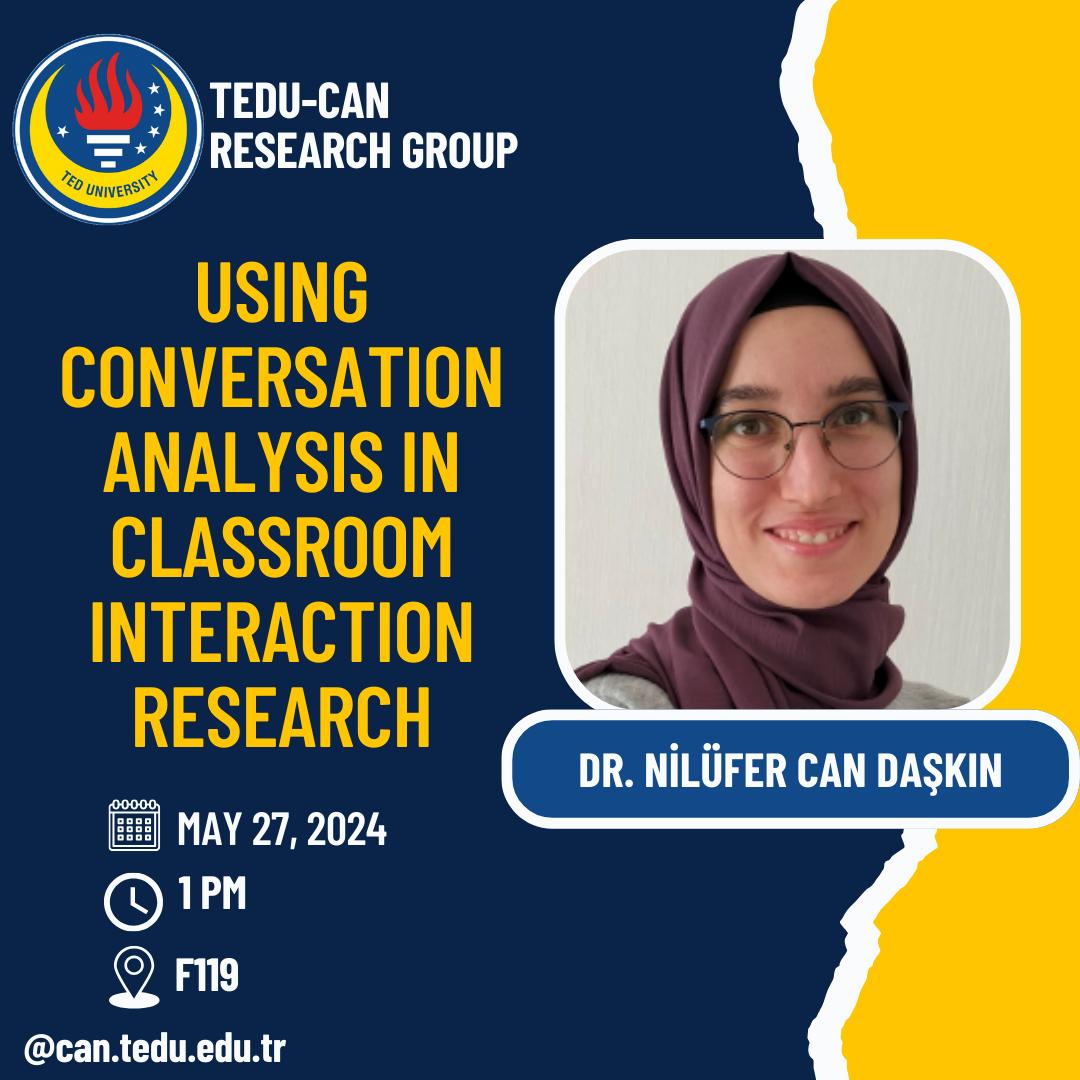
Using Conversation Analysis in Classroom Interaction Research
Dr. Nilüfer Can Daşkın
Classroom interaction research has a long history and has been carried out from various perspectives. Whereas earlier studies of classroom interaction focused on the observation and description of interaction using coding schemes, the later ones brought psycholinguistics, sociolinguistic, sociocultural and interactional perspectives to the study of classroom interaction. As part of the interactional approach, the use of Conversation Analysis (CA) as a research methodology in classroom interaction studies has gained momentum with a growing body of research offering findings and implications based on real naturally- occurring classroom practices. It is now acknowledged that meanings and actions are co- constructed in and through the interaction of the participants and understanding the actual dynamics of classrooms is possible through the analysis of the micro-details of classroom talk-in-interaction. As a methodology that requires a micro-analysis of naturally occurring data on a turn-by-turn basis in a sequential environment from an emic perspective, CA can potentially reveal the complexity of classroom interaction and the instructional practices which may create learning opportunities and construct micro-moments of understanding. Against this background, in this seminar, I aim to describe and demonstrate the steps involved in conducting conversation analytic classroom interaction research with examples from existing research: data collection, producing transcriptions, reviewing the research literature, collection building, doing the analysis and eventually publishing the findings. The steps involved in such research is not linear and requires a circular and recursive process for doing robust analysis and offering empirical findings.
Here is an announcement about the future of Micro Analysis Network. First of all, I would like to thank you all for following us almost for a decade, contributing to our activities, and participating in our events. Thanks to your endless support, our research group, originally started by Olcay Sert, Safinaz Büyükgüzel, and myself and later continued by Nilüfer Can Daşkın, Nergiz Kardaş İşler, Devran Demir, Fatma Badem and myself, has managed to disseminate Conversation Analytic research in Türkiye and helped a great number of researchers produce groundbreaking research in different fields of inquiry. I would also like to thank all research group members for their efforts and time that made Micro Analysis Network a leading group for so many years.
Unlike what might have been implied above, this is not a farewell message 🙂
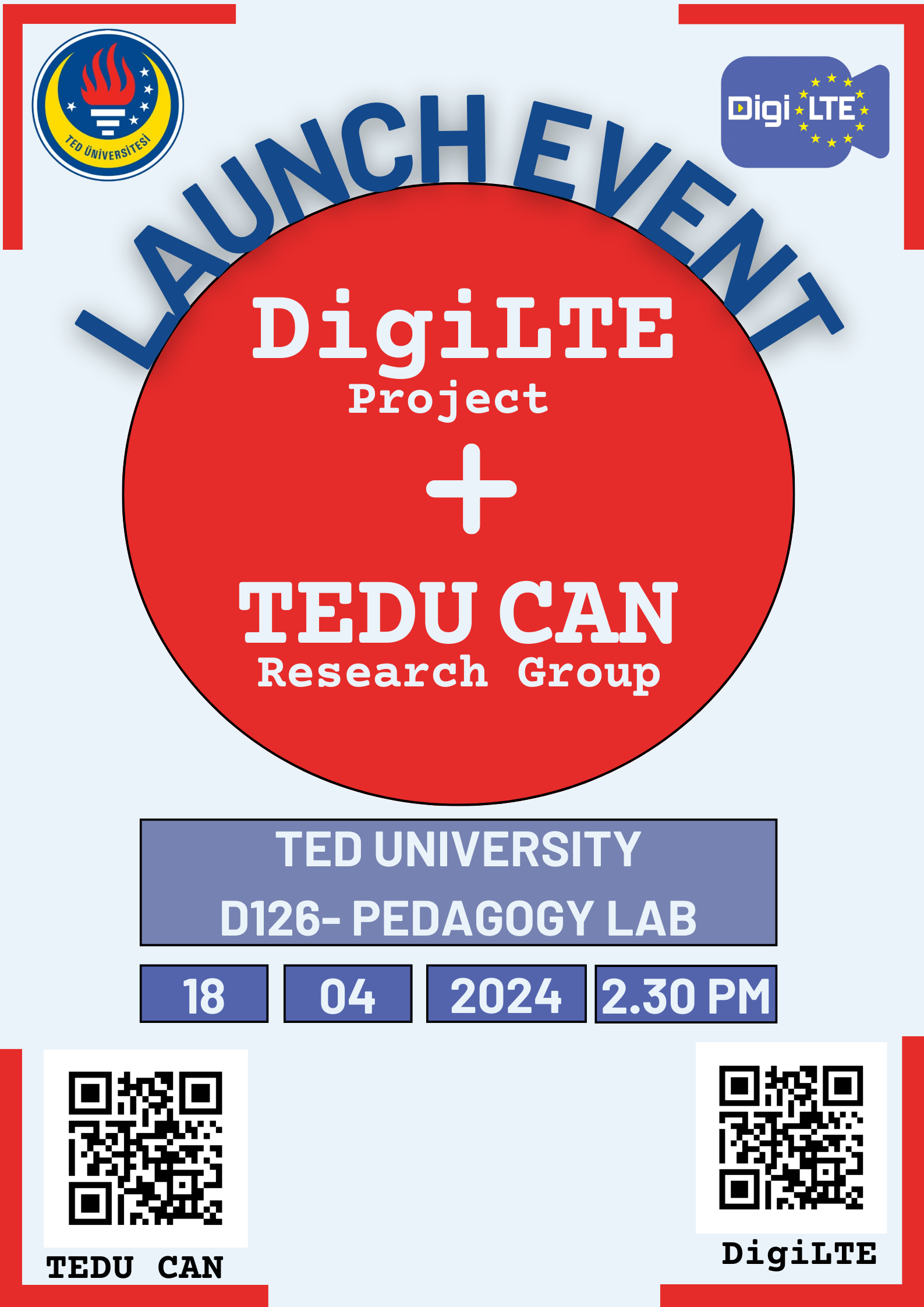
We are happy to announce that Micro Analysis Network is being TED University Conversation Analysis Research Group (TEDU CAN) and will continue its activities at TED University. Therefore, effective immediately, this email list, website, and Twitter/X accounts will use the “TEDU CAN” as the institutional/group name. TEDU CAN will organize seminars, courses, data sessions, reading groups, and many other activities. Using this semester as the interim period for the merge, we will not be releasing calls for data sessions. However, we will organize a Launch Event (see the event flyer above), an invited seminar and possibly hold a few in-house, face-to-face data sessions. From next semester onwards, we will be operating at full capacity with a diverse array of activities.
In concluding, I would like to kindly invite you to the TEDU CAN Launch Event (joint event with the DigiLTE project launch) and to follow updates from our research group (https://can.tedu.edu.tr/). Please explore the new website in addition to earlier communication channels (blog & Twitter).
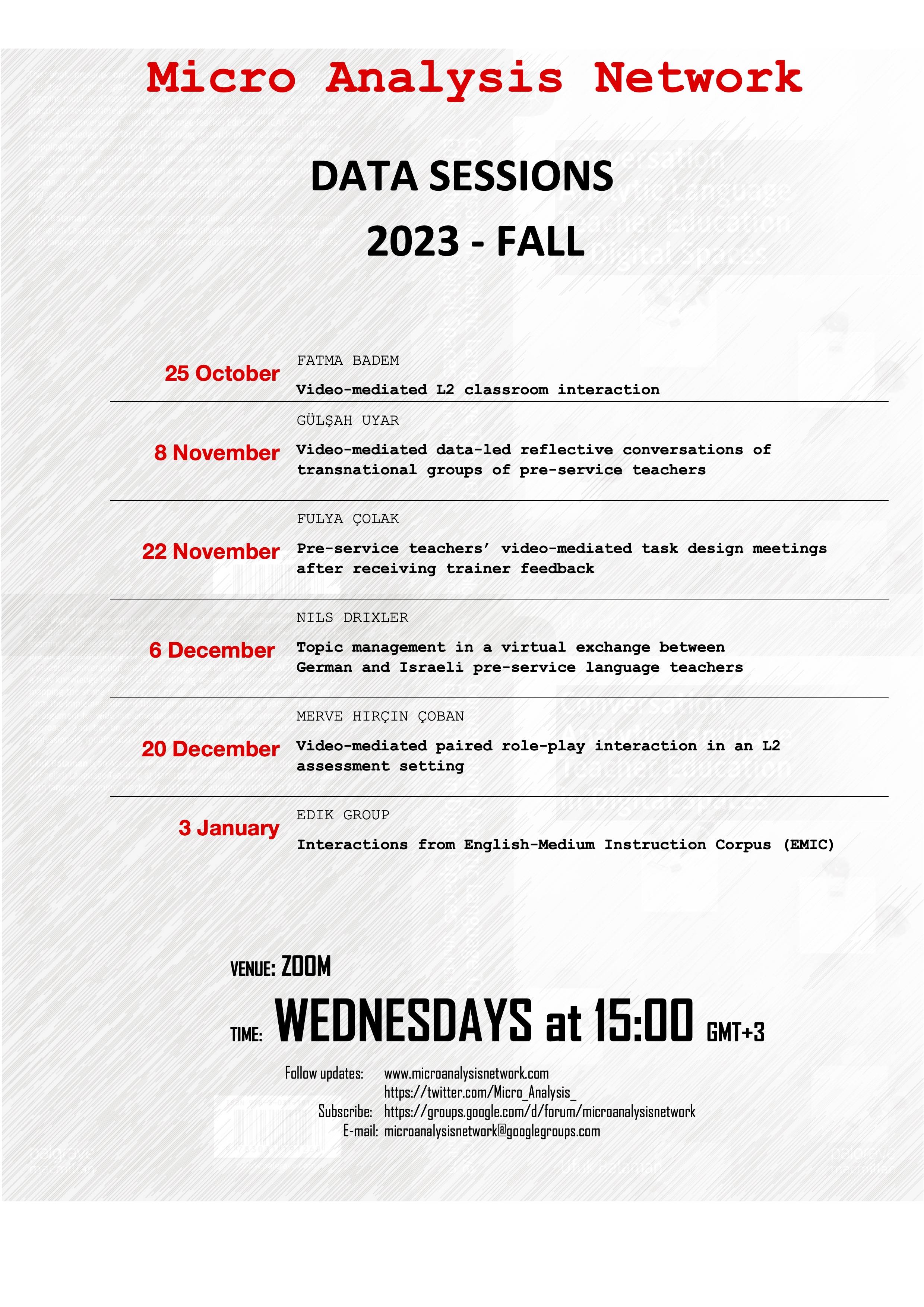
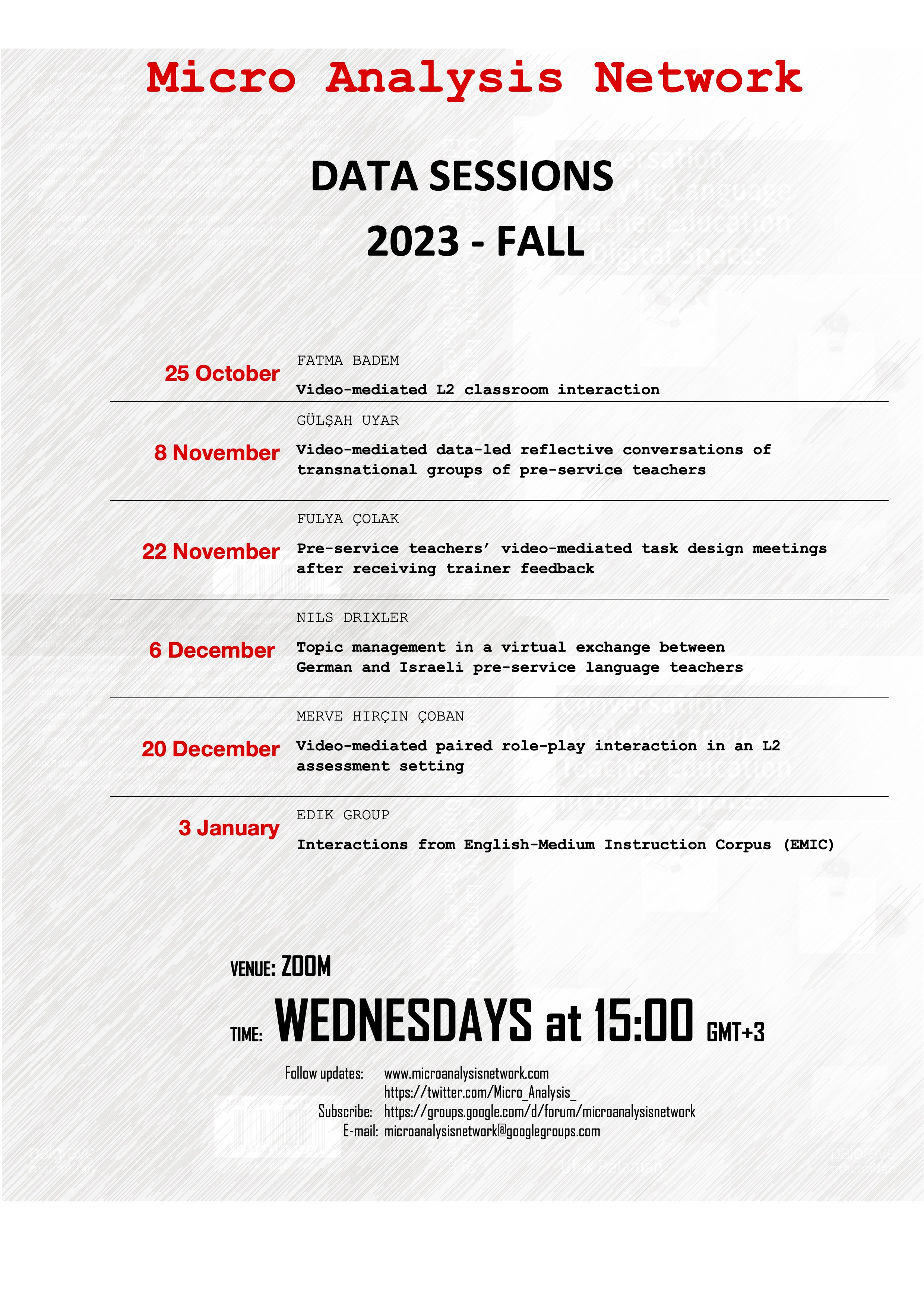
In the last session of the semester, EDIK Group will present an extract from their corpus of Interactions from English-Medium Instruction Corpus (EMIC). The session will be held online via Zoom, starting at 15:00 (GMT+3), January 3.
Click here to see the links of this week’s session.
In our next data session, Merve Hırçın Çoban (PhD student and instructor at METU) will present an extract from her corpus of video-mediated paired role-play interaction in an L2 assessment setting. The session will be held online via Zoom, starting at 15:00 (GMT+3), December 20.
Click here to see the links of this week’s session.

 TEDU CAN - TED University Conversation ANalysis Research Group